Astra
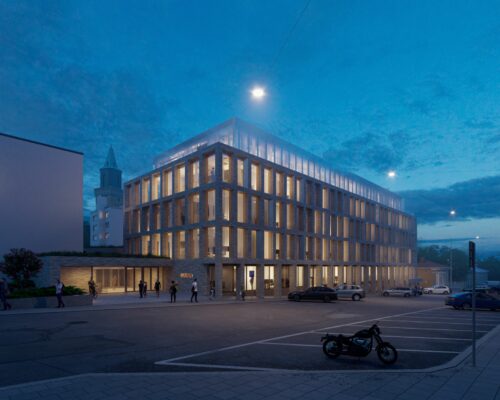
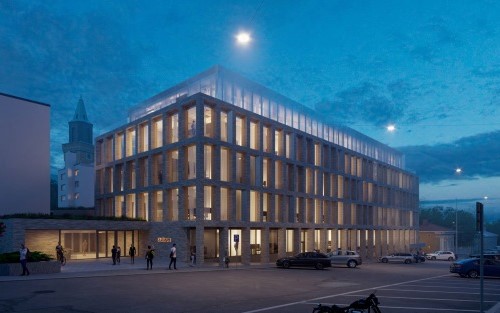
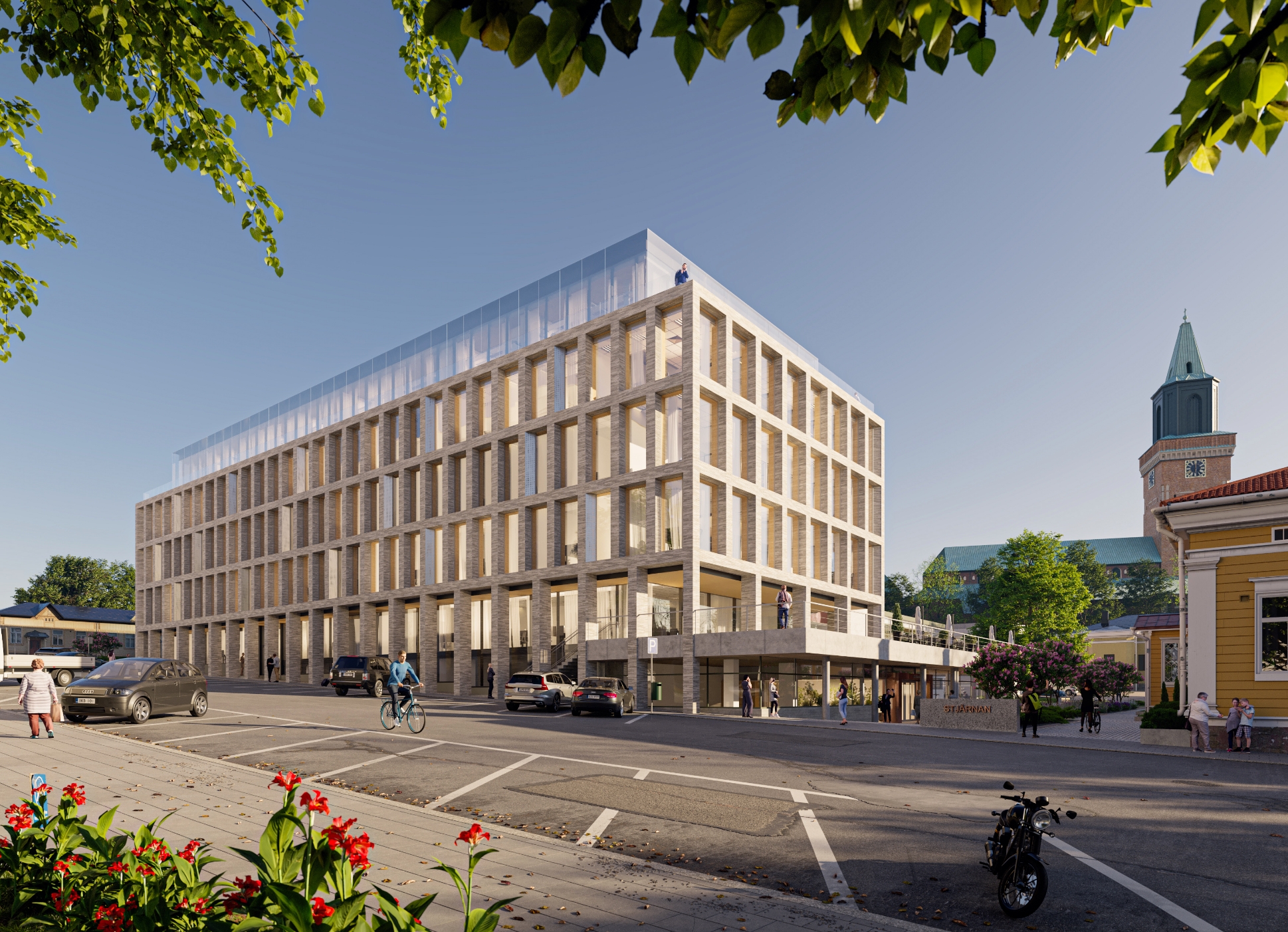
Astra is part of the Stjärnan block, which also includes Åbo Akademi University Library and the Handelshögskolan building, the School of Economics. The name Stjärnan originates from Carl Ludvig Engel’s city plan for Turku from 1827, and means “star” in Swedish. The building’s name, Astra, was chosen through an open naming competition in 2023. The goal was to find a name that reflects a modern and international campus and works equally well in Swedish, Finnish, and English. Astra means “stars” in Latin.
The building was constructed by the Åbo Akademi University Foundation. The principal architect of the new building is Pekka Mäki at Sarc+Sigge Oy. With an investment of approximately EUR 45 million, Astra is one of the foundation’s largest construction projects.
The project began in autumn 2022 with the demolition of the previous property, Gadolinia. The original café section and terrace were preserved and continue to be used as a café and restaurant.
The main users of Astra are Åbo Akademi University, the Åbo Akademi University Foundation, and the Centre for Blue Economy hosted by Aboa Advest. Astra is a meeting place that brings together students, staff, research, and development.
Sustainability
Sustainability has been a fundamental principle throughout the entire construction process. About 90 percent of the demolition waste from the old Gadolinia building has been reused. The flooring on the first floor has been recycled from the previous building, where small cracks and blemishes reveal its origin. The student restaurant has retained its original metal window frames, and the cement mosaic floors in the ground-floor entrance have also been retained.
Approximately 75 percent of the building’s energy is supplied by geothermal and solar sources. All energy used – electricity, district heating, and district cooling – is emission-free. The green roof delays rainwater before it enters the municipal sewer system, significantly improving stormwater management.
The construction project aims to achieve a four-star RTS certification. This requires, among other things, demand-based control of individual spaces, such as temperature regulation that adjusts according to occupancy. RTS is a Finnish environmental certification system that assesses sustainability based on national conditions.
History
Gadolinia, designed by Woldemar Baeckman and Helmer Löfström, was inaugurated on 21 November 1969. At the time, it was the foundation’s largest construction project and consisted of two parts: the laboratory building with six floors facing Porthaninkatu and a lower building facing the inner courtyard with a student restaurant and large glass windows. These sections were connected by a shared ground floor and basement levels, with the main entrance located on Piispankatu. Baeckman aimed for openness toward the block’s other buildings, and the contrast with the older wooden buildings was intentional.
Beneath the building there is a radioactive room where one of Finland’s first particle accelerators has stood since the 1970s. The accelerator is still radioactive, but the levels are not dangerous. According to the Radiation Safety Authority’s statement, it has been decided to keep it encapsulated until 2035.
Art
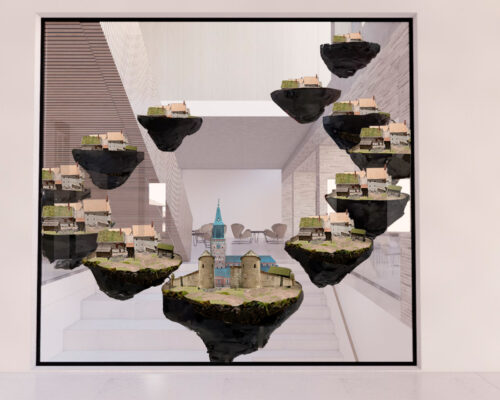
The foundation has invested in public art in Astra according to the one-percent principle, which means that about one percent of the construction costs has been reserved for art. Read more about the art concept in Astra here.
Conference Space Gadolinium
On the fifth floor there is a conference space belonging to the housing company Fastighets Ab Gadolinia. The room has been named Gadolinium in honour of the Finnish chemist Johan Gadolin (1760–1852), who inspired the building’s former name, Gadolinia. Gadolinium is a rare earth metal and a chemical element named after Johan Gadolin.
Booking request can be made via stiftelsen@stiftelsenabo.fi / Executive Assistant Sandra Edfelt.
Project Phases
Archaeological excavations at the Book Tower
Images
Photographer: Vesa Loikas, Sarc+Sigge